If you’ve ever sourced spare parts for pipe-making machinery, you know the pain of checking a price quote in the morning and seeing it shift by 15% or more by the afternoon. As a third-generation supplier of these components—someone who’s spent 18 years standing on loading docks, troubleshooting with pipe mill operators at 2 a.m., and haggling with foundry owners over billet pricing—I can tell you this isn’t random markup or guesswork. The price of these parts hinges on a set of interconnected, often underdiscussed factors that no generic pricing algorithm will capture. Let’s break down what actually shapes that final number, from the raw material in a die to the logistics of getting a bearing to a site in rural Brazil. Pipe-making Machinery Spare Parts
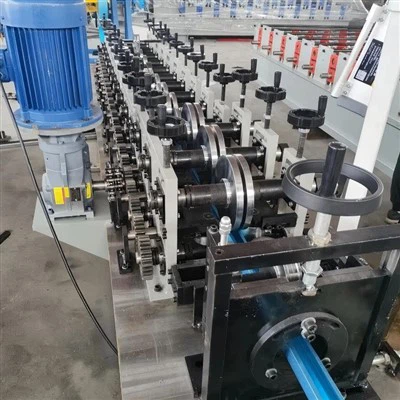
First and most impactful is raw material composition, and I don’t just mean “steel.” Pipe-making machinery operates in environments that range from -20°F North American pipeline construction sites to 1,200°F high-frequency welded pipe mills, so every part is engineered for a specific application. A simple shear blade that chops through mild steel pipe doesn’t need the same material as a forming roll that bends high-strength carbon steel into 48-inch diameter pipe. For low-stress parts like guide rollers, we use AISI 1045 steel, which costs roughly $0.65 per pound as of 2024. For forming rolls that experience continuous high pressure and abrasion? We rely on AISI D2 tool steel, a high-chromium alloy that costs $2.80 per pound—more than four times as much. Add in specialty alloys: for parts used in offshore pipe mills, we’ll incorporate tungsten carbide or nickel-based superalloys, which can run $15 to $40 per pound. The difference between a $20 replacement bearing and a $200 custom inner ring comes down to these alloys, plain and simple. Last year, a major pipe mill in Alberta switched from AISI 4140 to a chrome-molybdenum alloy for its mandrel bars, and their per-part cost jumped 32%—no surprises here once you see the material bill.
Next is manufacturing method, which changes not just cost but part lifespan. Many new suppliers try to cut corners with cast parts, but pipe-making parts are too high-stakes for that. Casting involves pouring molten metal into a mold, which is cheaper for complex geometries, but internal porosity from uneven cooling means cast parts fail 20-30% faster than forged ones. For critical parts like die heads or shear blades, we use open-die forging, where a hammer compresses a heated billet into shape, aligning the metal grain structure to withstand cyclic stress. Forging adds 2-3 hours of processing time per part, plus the energy cost of heating the billet to 2,300°F, so a forged die head costs 40-50% more than a cast equivalent. That said, cast parts make sense for non-critical components like standard rollers or brackets. We’ll often quote cast parts for small fabricators with lower-volume runs, and they save 25% on their parts without risking downtime. There’s also CNC machining precision to consider: a part machined to ±0.001 inch (for precision forming rolls) requires 8-10 hours of machine time, while a part machined to ±0.01 inch (for a simple flange) takes 1 hour. That precision doesn’t come cheap, but it eliminates the misalignment that causes pipe defects and mill downtime.
Customization and lead time are two more factors that trip up new buyers. A lot of our customers don’t need off-the-shelf parts; they need parts that fit their specific mill line, which might be 20 or 30 years old and no longer supported by the original equipment manufacturer (OEM). Last quarter, we got an order from a pipe mill in Ohio for a set of forming rolls for a 1997 Skoda mill—no drawings, no specs, just a broken roll they’d measured with a ruler and calipers. That required reverse engineering, which involves scanning the part, refining the CAD model, and testing prototypes, adding $1,200 to the quote and pushing lead time from 2 weeks to 6 weeks. If a customer needs emergency parts to fix a mill downtime event, we offer rush machining and overnight shipping, which adds 75-100% to the base cost. We had a customer in Saudi Arabia last year who called at 9 p.m. about a broken mandrel bar that had shut down a $2M/day production line. We pulled a finished bar from a pending order, air freighted it 7,000 miles, and delivered it in 48 hours—total cost, including air freight, was $18,000, vs. our standard $7,500 for the same part. The customer was happy, and that markup is justified by the priority manufacturing and logistics, not just profit.
Supply chain volatility, and specifically lead times for key components, is another huge factor we deal with every day. For the past three years, global foundries specializing in tool steel and specialty alloys have operated at 90% capacity, with lead times stretching from 8 weeks in 2021 to 16 weeks in 2024. When a foundry has a 12-week backlog, they can’t prioritize small orders from our shop—we have to book material months in advance, often paying a 10-15% premium for material we don’t need for 6 months. Bearings are another weak point: three major bearing manufacturers control 80% of the market for heavy-duty pipe mill bearings, and they raised prices 18% in 2023 due to rising raw material and energy costs. Last year, a customer requested a quote for a set of flange bearings, and we quoted $1,200 each, but by the time they signed the order two weeks later, the bearing manufacturer had posted a new price of $1,450 each. We had to eat $2,500 of that difference to keep the customer—something we can’t do every time. Even logistics costs play a role: fuel surcharges added $0.75 per mile on over-the-road shipping in 2024, so a 1,000-mile delivery that cost $800 in 2022 now costs $1,550. For international shipments, ocean freight rates for containerized parts have fluctuated from $1,500 per container in 2020 to $4,500 in 2024, adding hundreds of dollars to an order for a customer in Southeast Asia.
OEM vs. aftermarket parts quality is a final factor that customers often overlook, and it shapes both cost and long-term value. Many pipe mills default to OEM parts, even though aftermarket parts can be equivalent or better for 30-40% less. The OEM brand markup covers overhead for their large sales teams, marketing, and legacy support, not necessarily part quality. For example, a shear blade from the OEM for a common pipe mill model costs $450, while our aftermarket forged blade with the same alloy and heat treatment costs $280, and our customers report it lasts 10% longer because we test every batch for hardness. That said, not all aftermarket parts are equal: some cut corners with lower-grade steel and shorter heat treatment cycles, leading to parts that fail in half the time. We test every batch of our parts in our on-site test mill, running them for 100 hours under simulated pipe production conditions to check for wear, so our parts carry a 12-month warranty, same as most OEMs.
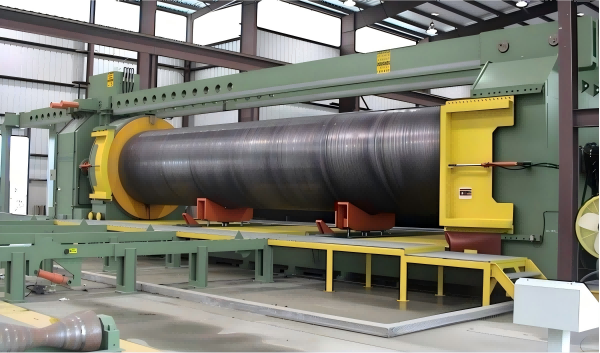
At the end of the day, the price you pay for pipe-making machinery spare parts isn’t just for the metal in the part or the time on a CNC machine. It’s for the raw material that withstands 1,000°F temperatures, the manufacturing precision that avoids costly pipe defects, the rush shipping that keeps a customer’s line running, and the quality testing that prevents unexpected downtime. If you’re tired of overpaying for OEM parts or getting stuck with cheap, short-lived aftermarket components, we can work with you to quote parts tailored to your mill’s specific needs, transparent on every cost factor. To get started, reach out at your convenience to discuss your requirements.
Steel Pipe Production Line References
Machinery Lubrication Magazine. (2023). "Spare Part Cost Drivers for Heavy Industrial Equipment." Industrial Press.
American Iron and Steel Institute. (2024). "Alloy Steel Pricing and Performance for Industrial Applications." AISI Technical Report.
World Steel Association. (2024). "Global Raw Material Supply Chains for Industrial Steel Components." WSA Report.
Tianjin Binhai Yashanway Import and Export Co., Ltd.
Tianjin Binhai Yashanway Import and Export Co., Ltd. is one of the most reliable pipe-making machinery spare parts manufacturers and suppliers in China, also supports customized service with low price. Welcome to wholesale bulk pipe-making machinery spare parts made in China here from our factory. Contact us for quotation.
Address: B-508, Xiangnian Plaza, Dongjiang Road, Hexi District, Tianjin, China
E-mail: crystal@yashanway.com
WebSite: https://www.yashanway.com/
