If you’re a facility manager, electrical contractor, or manufacturing plant owner who’s ever spent a Friday night troubleshooting a mysterious signal glitch or a mid-shutdown equipment outage caused by unprotected wiring, you know screened flexible cable isn’t just another part of your bill of materials—it’s the quiet workhorse that keeps your operations running. As a long-time screened flexible cable supplier with 18 years on the ground, I’ve talked to hundreds of buyers who’ve wasted time and money on underperforming cables, either because they picked a brand based on flashy marketing or grabbed the cheapest option from a random vendor. The thing is, not all screened flexible cable is created equal, and matching the right brand to your specific use case can mean the difference between a smooth production run and a costly, avoidable headache. Let’s break down the top brands I recommend, not because they pay me (I wish!), but because I’ve tested their cables in real-world environments, heard feedback directly from buyers, and checked their technical specs against industry standards. Screened Flexible Cable
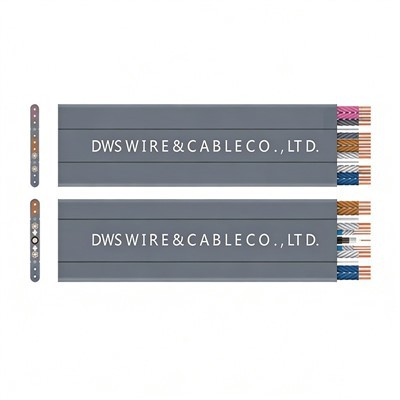
First, let’s get one critical thing straight: screened flexible cable is designed to do two non-negotiable jobs. The “flexible” part means it can bend, twist, and move repeatedly without breaking down—think of it on robotic arms in a car assembly line, or the cable snaking through a portable conveyor belt that’s repositioned three times a day. The “screened” part is about electromagnetic compatibility (EMC) and radio frequency interference (RFI): it blocks external noise from messing with sensitive electronics, and also keeps your equipment’s signal from leaking out and causing issues nearby. That’s why a cheap, no-name brand might look similar on the shelf, but will fail fast in high-vibration, high-noise industrial settings.
Starting with heavy-duty industrial applications—like automotive assembly lines, mining equipment, or heavy robotics where cables are yanked, twisted, and exposed to oil and dust—my top pick is Lapp Group’s ÖLFLEX Screened Flexible Cable line. I’ve supplied these cables to three different automotive plants in the Midwest over the last seven years, and I’ve only had two warranty claims, both of which were for improper installation (a user looping the cable too tight around a pulley, not the cable itself). What makes ÖLFLEX stand out is their screen design: they use a tinned copper braid with a 95% coverage rate, which is the gold standard for blocking RFI in environments with multiple motors and VFDs (variable frequency drives) that emit strong electromagnetic fields. Their flexible core is also made with fine-stranded copper conductors, which means it can handle up to 10 million bending cycles—way more than the 1 million cycles required by IEC 60227 standards for heavy-duty flexible cable. I remember one plant that switched from a cheaper competitor’s cable to ÖLFLEX on their robotic welding arms; they cut cable replacements by 70% in the first year, which saved them over $45,000 in downtime and parts. The only caveat here is that ÖLFLEX is a premium product, so it’s not the cheapest option, but the total cost of ownership is almost always lower because it lasts three times longer than budget brands.
Next, for commercial automation and instrumentation use cases—like building management systems (BMS), medical device manufacturing, or food and beverage processing where you need compliance with strict safety standards—Prysmian’s MINERGY Screened Flexible Cable is my go-to. I recently supplied 12,000 meters of this cable to a medical device plant that assembles insulin pumps, and they needed something that wouldn’t interfere with their precision sensor readings. Prysmian’s screen uses a combination of aluminum foil and copper braid, which gives great EMC protection without adding unnecessary bulk—important when you’re routing cables through tight spaces in medical devices. What I love most about Prysmian is their attention to regulatory compliance: their MINERGY line is UL 1010 certified for instrumentation, meets FDA standards for food contact (critical for beverage and food packaging lines), and is rated for temperatures from -40°C to 90°C, so it works in both cold storage rooms and warm processing areas. I’ve also used this cable in a few BMS projects for office buildings, where it was routed alongside power cables without causing interference in the fire alarm or access control systems. It’s a mid-range price point, so it’s a great balance between performance and cost for applications where you don’t need the extreme durability of ÖLFLEX, but you still can’t risk signal interference.
For small to mid-sized projects, or applications where budget is a top priority but you still need reliable screened flexible cable—like small HVAC control systems, retail store lighting controls, or DIY industrial prototyping—Belden’s 8723 Screened Flexible Cable is a solid choice. I keep a stock of this cable in my warehouse because so many small contractors and startup manufacturers come to me saying they can’t justify the cost of premium brands for a 500-meter project. Belden is a trusted name in connectivity, and their 8723 line is designed specifically for low-voltage control and signal applications. The screen is a tinned copper braid with 80% coverage, which is enough to block most RFI from common sources like fluorescent lights and small motors. It’s rated for up to 1 million bending cycles, which is fine for applications that don’t involve heavy, repetitive movement (like a fixed control panel cable rather than a robotic arm cable). I will say, though, that this isn’t the best choice for environments with high vibration or constant bending—we had one customer who used it on a portable conveyor belt and had to replace the cables every three months, which ended up costing them more long-term. But for the right use case, it’s a great budget option that delivers consistent performance.
Now, let’s talk about a newer player that I’ve been testing over the last two years: Alpha Wire’s PRO-FLEX Screened Flexible Cable. I was skeptical at first because it’s a relatively new brand in the screened flexible cable space, but I started supplying it to a few startup electronics manufacturers who needed a cable that’s both flexible and lightweight for small consumer devices. What sets Alpha Wire apart is their focus on environmental sustainability: their PRO-FLEX line uses recycled copper conductors and PVC insulation with low-VOC (volatile organic compound) materials, which is a big plus for manufacturers looking to reduce their carbon footprint. We’ve also found that their screen is particularly good at blocking RFI from wireless signals, which is important for devices that connect to Bluetooth or Wi-Fi. It’s a mid-range price point, so it’s not as cheap as Belden, but it’s a good option for applications where sustainability is a priority and you need a slightly better performance than Belden offers for small, light-duty moving parts.
Before I wrap up, I want to share a few red flags I’ve seen over the years that will save you from making a bad choice. First, always check the screen coverage rate: anything below 80% is risky because it won’t block enough interference. Second, match the cable’s bending cycle rating to your application: if you have a cable that moves 10 times a minute, you need a cable with at least 5 million bending cycles, not 1 million. Third, don’t forget about environmental ratings: if your cable is going to be exposed to oil, make sure it’s oil-resistant (ÖLFLEX is, Prysmian is not, Belden is not, Alpha Wire’s is).

At the end of the day, the best screened flexible cable brand for you depends on your specific needs: heavy industrial use? Go with ÖLFLEX. Commercial instrumentation/medical? Prysmian. Budget small projects? Belden. Sustainable, light-duty? Alpha Wire. If you’re not sure which is right for your application, my team and I are here to help—we’ve worked with hundreds of clients across every industry, and we can walk you through technical specs, sample testing, and pricing to make sure you get the right cable without overpaying. Whether you need 50 meters for a small repair or 50,000 meters for a new production line, we’re ready to support your project. Get in touch with our team to discuss your screened flexible cable requirements today.
Data Cable References:
IEC 60227: Polyvinyl chloride insulated cables of rated voltages up to and including 450/750 V
UL 1010: Standard for Safety for Measurement, Control, and Laboratory Equipment
FDA 21 CFR Part 177: Food Additives Permitted for Direct Addition to Food for Human Consumption
Cixi Davos Wire & Cable Co., Ltd.
As one of the most professional screened flexible cable manufacturers and suppliers in China, we also support customized service. Please feel free to buy bulk high quality screened flexible cable in stock here from our factory. For price consultation, contact us.
Address: No.3, Lane 91, Ruan Ding Road, Linxi Village, Xiaolin Town, Cixi City
E-mail: roy798@163.com
WebSite: https://www.cj-supplychain.com/
