Hey everyone, if you’ve been hanging around the hardscaping or landscape game for a minute, you’ve probably heard the term “waterfall boulders” thrown around—but if you’re new here, or just curious what makes these specific rocks so different from every other boulder out there, you’re in the right spot. I’ve been supplying these bad boys for over 10 years now, so I’ve seen all the questions, all the mistakes people make when picking boulders, and all the reasons why waterfall boulders are total game-changers for everything from backyard water features to public park designs. Let’s break down what actually makes them unique, no boring textbook jargon, just real talk from someone who’s hauled, stacked, and sold more of these than I can count. Waterfall Boulders
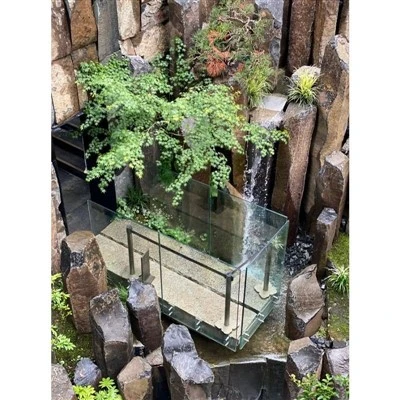
First off, let’s get the basics straight: waterfall boulders aren’t just any big rock you find in a river or quarry. Sure, they’re usually pulled from natural deposits, but the way they’re formed, shaped, and sized sets them apart immediately. Most standard boulders you grab for landscaping are blocky, jagged, or have weird, uneven contours that make stacking them for moving water a nightmare. Waterfall boulders, though? They have this specific type of weathering from being in or near fast-moving water for thousands (even millions) of years. That fluvial weathering, as the science folks call it, isn’t just random—it creates the most useful shape for water flow. Think about it: if you want a waterfall that looks natural, not like a kid stacked random rocks, you need rocks that can guide water smoothly, not gush over a sharp edge. That’s exactly what these boulders do.
Let’s talk size first, because that’s a big one people get wrong. I’ve had so many customers come to me saying “I need a big boulder” for their waterfall, only to realize they’re picturing a 200-pound rock that’s too small to hold back even a tiny stream. Waterfall boulders are generally sized by their “weight class” relative to the waterfall they’re supporting. For small backyard waterfalls (like 1 to 3 feet tall), you’re looking at 500 to 1,500-pound boulders—small enough to move with a skid-steer, but heavy enough that water won’t shift them over time. For mid-sized jobs, like 4 to 8-foot falls, we mostly stock 2,000 to 5,000-pound units, and for big commercial projects (like waterfalls in public parks or resort grounds), we’ve got boulders that tip the scales at 10,000 to 20,000 pounds. The key here is that they’re not just bulky—they have a relatively low profile compared to, say, a mountain boulder. That flat, slab-like or gently sloped upper surface is what lets water spread out instead of just pouring straight down, which is exactly what creates that soft, natural waterfall look everyone wants.
Next up, the surface texture—this is non-negotiable for waterfall boulders, and it’s something you can’t fake with a rock that’s been broken up in a quarry. Because they’ve been tumbled by water for millennia, their surfaces are smooth in specific ways. Not like polished river rocks you see in a fish tank (those are too smooth, they don’t grip well and can be slippery when wet), but smooth with subtle ridges and indentations. Wait, hold on—let me explain that. If a boulder was just tossed around by waves, it gets too sleek, right? But waterfall boulders are usually in areas with consistent, not violent, moving water—so they get this mix of smooth, water-worn planes and tiny, natural crevices. Those crevices are critical! When water flows over the boulder, it doesn’t slide off immediately. Those little grooves slow the water down a tiny bit, prevent erosion around the base of the boulder, and even create tiny little trickle streams on the sides of the main fall, which makes the whole feature look way more realistic. I once had a customer try to use a polished river rock as a main waterfall boulder—his water just ran straight off, no side streams, and after the first rain, the rock slid a couple inches because there was no grip. Lesson learned: texture matters, and only waterfall boulders have that perfect balance of smooth and grippy.
Color is another characteristic that’s totally unique to these rocks, or at least most of the ones we supply. Wait, why is that? Because most waterfall boulders come from areas with consistent sediment and mineral deposits, so their color is usually uniform but with subtle variations, not the patchy, streaked look you get from random quarry boulders. The most common colors we see are muted grays, soft tans, and occasionally dark browns, all with a matte finish (no shiny spots, which would stand out too much against greenery). The reason color matters here is that you want the waterfall to look like it’s part of the existing landscape, not a random rock you dropped in. A lot of quarry boulders have bright, sharp colors that clash with lawns or trees, but waterfall boulders have weathered over so long that they blend right in. I’ve also noticed that because they’re formed in natural water systems, they don’t have the chemical coatings that some quarries use to “enhance” rock color—so no weird fading in sunlight, no leaching into your pond or stream. That’s a big one for people who care about aquatic life, by the way.
Now, let’s talk about structural integrity, which is probably the most underrated characteristic of waterfall boulders. When you stack rocks for a waterfall, you need them to hold up to two things: constant water pressure and freeze-thaw cycles, especially if you’re in a climate that gets cold. A lot of cheap boulders you can buy online are soft sedimentary rocks—like sandstone or shale—that will absorb water, crack when it freezes, and crumble after a few years. Waterfall boulders, though, are almost always hard rock types: granite, gneiss, or basalt. Wait, basalt is super common for waterfall boulders in the Pacific Northwest, right? Granite is big in the Northeast. The thing is, these rocks are impermeable—they don’t absorb water, so when temperatures drop and water in the gaps around the rock freezes, it doesn’t seep into the boulder and break it apart. I once had a customer in Maine who tried to save a few bucks on sedimentary rocks for his backyard waterfall; by the third winter, half the boulders had split down the middle, and his waterfall was basically a trickle. We replaced them with waterfall boulders (all granite, in his case) and 8 years later, they’re still holding strong, no cracks, no shifts. That structural durability isn’t an accident—it’s from being exposed to millions of years of water and temperature changes, so these rocks are built to last.
Oh, and one more thing that’s specific: their shape versatility, but only in a good way. Wait, earlier I said they have a low profile, but they also have natural ledges. Like, not man-made ledges—just slight, natural steps carved by water over time. That means you don’t have to cut or modify the rock to make a tiered waterfall. A lot of people don’t know that modifying natural boulders ruins their integrity and their natural look. But with waterfall boulders, you can nest two or three together, using their natural ledges, to make a 2 or 3-tier waterfall without any cutting. I’ve had so many landscapers tell me that’s their favorite part about working with these rocks—they save so much time on prep work, and the end result looks way more authentic than a stacked, cut-rock waterfall.
Wait, let’s get real for a second—why does any of this matter? I know some of you are thinking “can’t I just use any boulder?” but the answer is no, and I’ve seen firsthand what happens when you don’t use the right one. I had a customer last year who bought 4 big rocks from a big-box store for his new pond waterfall. The first week, one rock slid into the pond because it had no grippy texture. Then, the next month, a couple cracked because they were soft sandstone. He ended up calling me, frustrated, and had to haul all those rocks away to replace them with actual waterfall boulders. That’s the difference—these rocks aren’t just decorative, they’re functional. They’re engineered (by nature, over millions of years) to move water safely, last for decades, and look like they’ve always been part of the landscape.
Another thing I should mention: sourcing. Like I said earlier, waterfall boulders are pulled from natural water deposits, so they’re not quarried in the same way as regular landscaping rocks. Most suppliers (including mine) get them from riverbeds, glacial deposits, or old creek beds where they’ve been exposed to that water weathering we talked about. That means they’re not mass-produced, so each one is unique—no two waterfall boulders are exactly the same, which is why they’re perfect for custom landscapes. I can’t tell you how many times a homeowner will come to me, pick out a specific boulder because it has that perfect indent in the right spot to make a side stream, and that’s the one they end up using as their main focal point. It’s little touches like that that make a waterfall look amazing, and you can’t get that from a generic, quarried rock.
Let me also address a common misconception: people think waterfall boulders are only for big projects. No way! We supply small ones (100 pounds or so, though those are on the lighter end) for tiny backyard bubblers or stream edges. Wait, hold on—wait a second, when someone asks for a waterfall boulder, size is flexible, but the characteristics stay the same. A 100-pound waterfall boulder has that same smooth-grippy texture, impermeable hard rock, and subtle color variations as a 20,000-pound one. So even if you just want a small trickle waterfall in your patio, you can use a small waterfall boulder, not a random rock from your backyard. I’ve put in 2-foot tall waterfalls for apartment balconies with our 500-pound waterfall boulders, and they look just as good as a big residential backyard waterfall.
Now, if you’re here because you’re planning a project—whether it’s a small backyard water feature, a commercial park waterfall, or a whole landscape redesign—you might be wondering where to start. The biggest mistake people make is guessing at size, shape, and type. That’s why I always tell customers to talk through their project with someone who actually works with waterfall boulders, not just sells any rocks. We can help you pick the right weight, texture, and size based on your waterfall height, your climate, and the look you’re going for. We also handle delivery, because these boulders are heavy—you don’t want to try to move a 5,000-pound rock with a pickup truck, trust me.
If you’re ready to stop guessing and get the right rocks for your next water feature, we’re here to help. We’ve got a huge selection of waterfall boulders in stock, in all sizes, colors, and shapes, perfect for any project, big or small. Just reach out to us to chat through your needs, and we can walk you through every step—from picking the right boulders to delivery and even placement tips if you need them. No pressure, just honest advice from someone who’s been in this game for over a decade.
Wait, before I wrap this up, let me make sure I didn’t miss anything key. Let’s recap the main characteristics of waterfall boulders, so you can spot them next time you’re shopping: 1) Shaped by long-term fluvial weathering, so they have low profiles and natural ledges for smooth water flow; 2) Hard, impermeable rock (granite, basalt, gneiss) that withstands freeze-thaw and constant water pressure; 3) Perfectly balanced texture—smooth enough for water to glide over, but grippy with subtle crevices to slow water and prevent erosion; 4) Muted, uniform matte colors that blend into natural landscapes; 5) Unique, one-of-a-kind shape from natural formation, no two exactly alike; 6) Sized specifically for supporting water features, with weight matched to the project scale.

That’s it, no fancy stuff, just real, practical characteristics that make waterfall boulders worth the investment. I’ve seen so many projects fail because people cut corners on rock quality, and I’ve seen so many projects last for 50+ years because they used the right rocks. When it comes to water features, the foundation is the rock—don’t skip on that. If you’re ready to take your project to the next level, hit us up to connect and discuss your needs.
Ying Stone References
- American Society of Landscape Architects. (2021). Natural Stone for Water Features: Durability and Design Considerations.
- U.S. Geological Survey. (2019). Fluvial Weathering Processes and Rock Characteristics in Freshwater Ecosystems.
- International Association of Landscape Industries. (2022). Best Practices for Sizing and Selecting Boulders for Hardscaping Projects.
Orin International Trade Co., Ltd.
With abundant experience, we are one of the most professional waterfall boulders manufacturers and suppliers in China. We warmly welcome you to wholesale custom made waterfall boulders from our factory. If you have any enquiry about cooperation, please feel free to email us.
Address: No.3-1, Shangzhongdi Natural Village, Hexian Village, Shuangta Sub-district, Jiangshan City, Quzhou City, Zhejiang Province
E-mail: atlas@orinstone.com
WebSite: https://www.orinstone.com/
