Hey there, welcome to my little corner of the web. If you’ve ever rented an LED display for a concert, a trade show, a corporate event, or even that local festival down the street, you’ve probably stared at it from way off to the side, leaned in super close, or craned your neck from the back of a packed crowd – and thought, “Wait, does this thing even look good from here?” Rental LED Display
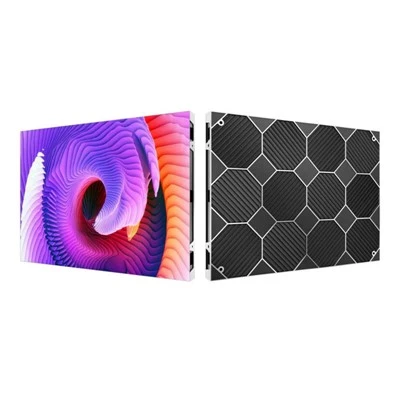
That question leads straight to the big one I get asked every single day as a rental LED display supplier: “What’s the actual viewing angle of rental LED displays anyway?” Let’s cut the jargon, skip the overcomplicated tech manuals, and break this down like we’re chatting over a coffee (or, more realistically, over a quick text from a client panicking about their event in two weeks). This isn’t some textbook explanation – this is what actually matters for your next gig, no fluff included.
First, let’s get one thing straight: “viewing angle” isn’t just a random number on a spec sheet. It’s the maximum angle off the direct center of the screen where the image doesn’t look washed out, dim, or like someone spilled a glass of soda on it. For rental displays, this is way more critical than fixed wall-mounted LED screens because rental events are all about spread-out crowds. A fixed display in a boardroom might have 10 people standing near it, but a concert rental? You’ve got 10,000 people: front row dead center, way off to the left side of the venue, way up in the balcony, even people leaning against the back wall holding drinks. If your display dies for the guy standing 60 degrees off-center, that’s a problem – and a lost client who’ll never call you back.
Now, here’s the part most tech blogs bury: all LED displays have two separate viewing angles, not just one. Horizontal and vertical. Horizontal is way more important for rental events because crowds are almost always spread side-to-side across a venue. If you’re setting up a stage, the screen is dead center, and half the crowd is on the left, half on the right. Vertical matters too – people in the back might be looking up at a steep angle, while front row is looking slightly down. Old school rental LEDs used to have garbage horizontal angles – like 120 degrees total, so you lost half the brightness and color by 30 degrees off-center. No one wants to see a band’s blue guitar turn gray because they’re standing off to the side.
So what’s the standard now for good rental LED displays? Most of our rental stock hits 160 to 178 degrees for BOTH horizontal and vertical. Wait, 178? That’s almost a straight 180, right? Yeah, pretty much. If you look at our screen from 89 degrees left of center, it still looks 95% as good as someone standing right in front. That game-changer came from switching the LED chips we use – we don’t cut corners on the chip type for rentals, even though it might save a few bucks on a cheaper model. The cheap rental LEDs still use older 120-degree chips that wash out like a old photo in sunlight. We only spec models that can hit that wide angle, because I’ve seen way too many events ruined by a side-of-stage crowd complaining they can’t see the presentation.
But wait – “178 degrees” isn’t a one-size-fits-all magic number. It’s the “symmetrical viewing angle,” which means the brightness stays consistent on both sides of the screen. Some cheaper brands brag about 180 degrees but it’s lopsided – like 170 left and 190 right, which sounds great until you realize half your crowd is on the weaker side. I learned that the hard way early on when a client rented a screen from another vendor for a product launch and called me screaming because their right-side booth visitors said the logo was unreadable. Never again – we double-check all our specs to make sure those angles are actually symmetrical, not just made up to look good on a spec sheet.
Now, let’s talk about what actually affects viewing angle, because this is the stuff that no one tells you when you’re booking a rental. It’s not just the screen itself – it’s also pixel pitch. Pixel pitch is the distance between each tiny LED light, measured in millimeters. If you’re getting a rental for a close-up event, like a conference where people are standing 10 feet from the screen, you’ll want a smaller pixel pitch (like 2mm or less). For a big outdoor festival where people are 50 feet away, you can go bigger, like 5mm. But here’s the catch: smaller pixel pitch screens have slightly narrower viewing angles? Wait, no – not much, but it’s there. We’ve seen 2mm screens that are solid at 175 degrees, which is still way more than enough, but if you go super tiny, like 0.9mm for a close-up fashion show, you might see a tiny dip at the edges, like 165 degrees. But honestly, for 99% of events, that’s not even noticeable unless you’re leaning way too far to the side and not paying attention to the show.
Another big factor for rentals: angle of incidence, basically meaning how much the screen is tilted. If you mount a screen flat on a stage, people in the back balcony are looking up at a steep angle – that’s the vertical viewing angle. We always adjust the tilt of the screen for the venue, but even then, the vertical angle matters. A lot of rental vendors just stack panels and call it a day, but we test every setup beforehand. Last month, we did a wedding where the reception hall had a mezzanine 15 feet above the dance floor. The groom wanted the couple’s first dance video playing up there too, so we tilted the screen down 25 degrees to hit the mezzanine. We tested it before the event, and even at a 20-degree downward angle from the mezzanine, the image was still crisp and bright. If we’d used an old 120-degree vertical screen, that mezzanine crowd would have seen a dark, washed-out blob.
Wait, but let’s bust a myth right now: viewing angle isn’t just about how far you can stand to the side. It’s also about color accuracy. A lot of people think if the screen is bright from the side, it’s good, but no – the colors shift. Like, if a red shirt on stage looks bright red from the center, but turns pink from the side, that’s a bad viewing angle. The good rental screens we use have what’s called “color uniformity” across the entire viewing angle. We test this all the time – we’ll stand dead center, then walk 50 feet left, 50 feet right, 30 feet back, and check if the color of the logo or video is exactly the same. For events where you’re branding (trade shows, product launches), that’s non-negotiable. I once had a client lose a $50k deal because their brand’s blue turned purple on a side screen at a trade show – yeah, they didn’t rehire that vendor. We make sure that never happens to our clients.
Now, let’s get practical, because you don’t care about test results unless they help you book the right screen. If you’re planning an event, what viewing angle do you actually need? Let’s break it down by event type:
- Small indoor events (corporate presentations, local meetups, wedding receptions): Crowd spread is tight, mostly front of the screen. You can get away with 150 degrees horizontal, 150 vertical. But why risk it? We usually go 160/160 for these, it’s only a tiny bit more cost, and it covers if someone decides to stand off to the side to take a pic.
- Medium events (concerts, trade show booths, mid-sized festivals): This is where wide angles matter most. Crowds are spread side to side, people in back rows, balconies. We always spec 165-170 degrees horizontal, 165 vertical here. If you skimp, you’ll get complaints.
- Large outdoor events (main stage festivals, stadium shows): This is the big one. Tens of thousands of people, left, right, balcony, way in the back. We only use screens with 175-178 degrees horizontal and vertical here. No exceptions. Last summer, we did a 20k-person festival main stage, and we had a whole group of people standing 65 degrees off-center (way further than most would stand) and they said the image was perfect. No dark spots, no faded colors, nothing.
But wait, what about when you’re outside, in sunlight? Does that mess with viewing angle? Oh, that’s another common question. Bright ambient light can make any screen look dimmer, but it doesn’t actually change the viewing angle. The wide angle of good rental LEDs still holds up in bright sun – you just need to make sure the screen has enough brightness (nit rating, but that’s a whole other topic). We use 5,000+ nit screens for outdoor events, and even at midday, the side of the screen is still bright enough to read.
Early on, I messed this up. My first big outdoor event was a 5k run expo. I rented a cheaper set of LED screens from a guy I met at a trade show, because he was “way cheaper” than the usual suppliers. On race day, the expo was outside, bright sun, and by 10 AM, the left side of the screen was so dim that no one could see the sponsor’s logo. People were coming up to our booth asking if the screen was broken. I spent the whole afternoon running around with a ladder tilting the screen, but it only helped a little. Later, I found out that cheap screen had a 120-degree horizontal angle, so by 45 degrees off-center, it was basically unwatchable. I lost that client, and I lost money on the rental. That’s why I now only work with reliable rental LED models that have proven wide angles – you don’t cut corners on this stuff, because it’s event reputation on the line.
Another thing: rental vs fixed LED. Fixed displays are installed, permanent, so their viewing angle is optimized for a single seating or standing area. But rental? You have no clue where people are going to stand, sit, lean, take photos. So the wider the angle, the better. It’s not just about the screen size – it’s about making sure every single person at your event has a good experience. If you’re hosting a company all-hands, the intern standing in the back corner of the room shouldn’t have to squint to see the CEO’s presentation. If you’re doing a concert, the friend who stood on the left side to get a beer shouldn’t miss the guitar solo because the screen washed out.
Wait, what about when you’re streaming the event? Do those wide angles matter for people watching at home? Honestly, not really. The camera is set up to capture the center of the screen, so home viewers never see the side areas. But for the live in-person crowd? That’s where it counts. I’ve had so many clients come back to me after events and say “The screen looked amazing from everywhere” – that’s exactly what we’re going for, and wide viewing angle is 80% of that.
Let’s also clear up a common confusion: some vendors will call their screen “wide angle” but only list one number, like “160 degrees.” That’s usually only horizontal. Always ask for both horizontal and vertical, and make sure they’re actual numbers, not rounded up. A lot of brands will list 180 degrees but it’s the total of both angles, not per side. So if they say “horizontal 178, vertical 178,” that means 89 degrees on each side of the center – that’s the good stuff. If they just say 178 total, that’s 89 left and 89 right, which is fine, but less clear.
Now, if you’re booking a rental, here’s my quick checklist for viewing angle:
- Ask for both horizontal and vertical viewing angles – no single numbers.
- Make sure they’re symmetrical (same left/right, top/bottom).
- Ask what kind of LED chips they use – the newer SMD (Surface Mount Device) chips have way better angles than old through-hole chips.
- If it’s an outdoor or large event, ask for test shots or references from other venues with similar setups.
- Don’t go for the cheapest option. I know, I learned that the hard way. Pay a little more for a screen with proven wide angles, and you won’t have to deal with panicked calls mid-event from the client.
At the end of the day, viewing angle for rental LED displays isn’t just a spec – it’s about every person at your event feeling like they’re part of it. No one wants to be stuck in a corner, missing the show because the screen looks like garbage. That’s why we prioritize wide, consistent angles across all our rental stock. We test every screen before it leaves our warehouse, make sure those angles hold up, and even help clients figure out what’s right for their specific venue and crowd.
If you’re planning an event and have questions about what viewing angle you need, or you want to chat about our rental options, don’t overcomplicate it. Reach out, and we can walk through it – no tech jargon, no pushy sales stuff, just honest advice based on years of doing this. We’ve got screens for every event, from small weddings to big festivals, and we make sure every single one delivers a great view from everywhere in the venue.

Thanks for sticking around, and can’t wait to help you pull off your next awesome event.
Indoor Fixed LED Display References
Understanding LED Display Viewing Angles, LED Professional Association, 2022
Rental LED Display Technical Specifications Guide, Event Tech Industry Report, 2023
Viewing Angle Performance for Event LED Installations, Venue Tech Journal, 2021
Shenzhen TrueColor LED Co., Ltd.
As one of the most professional rental LED display manufacturers in China, we also support customized service. We warmly welcome you to wholesale durable rental LED display for sale here from our factory. If you have any enquiry about cooperation, please feel free to email us.
Address: 3/F, Bldg A9, 10 Longyi Rd, Fuyong Sub-dist, Bao’an Dist, Shenzhen
E-mail: sales@truecolor-led.com
WebSite: https://www.truecolor-led.com/
